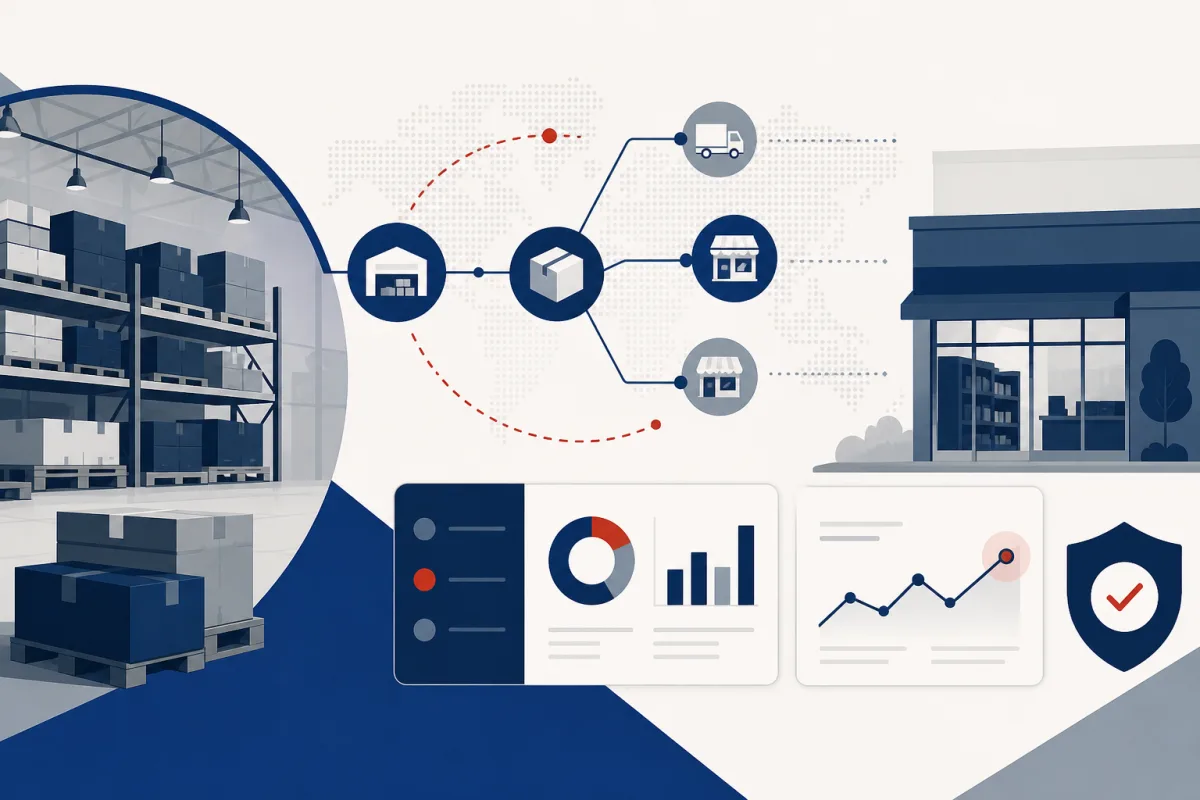
Fulfillment is the workflow where you, the FFL dealer, take an order from your customer and the distributor ships the firearm directly to the receiving FFL on your behalf. You never physically touch the inventory. Done correctly, fulfillment lets a small dealer offer a vastly larger catalog than they could ever stock, and use the distributor’s logistics rather than building their own.
It’s also where most new dealers make compliance mistakes that get them in trouble. Here is the actual workflow, the rules, and how to set it up cleanly.
The basic workflow
- Customer places an order on your website (or in your shop) for a firearm you don’t physically have in inventory.
- Customer pays you the retail price.
- You select the customer’s receiving FFL (their local gun store).
- You log into your distributor’s portal and place an order for that firearm, with the receiving FFL as the ship-to address. You pay the wholesale price.
- The distributor ships the firearm directly to the receiving FFL.
- The receiving FFL completes a Form 4473 with the customer and transfers the firearm.
You never receive the firearm. The receiving FFL handles the actual transfer, including the background check. This is “fulfillment to FFL.”
Why fulfillment works for new dealers
- Massive catalog with no inventory cost. You can list every SKU your distributors carry without buying any of it.
- Lower working capital. You only buy a firearm after the customer has paid you.
- No storage or insurance burden on fulfillmentped SKUs. The distributor holds the inventory.
- Faster fulfillment than receive-then-ship. Distributor → receiving FFL is one transit leg, not two.
Which distributors support fulfillment
Most major firearms distributors support fulfillment-to-FFL, but the specifics vary. Some require a separate fulfillment dealer agreement. Some charge a small per-shipment fulfillment fee. Some restrict which manufacturers can be fulfillmentped because of contractual terms with the manufacturer.
From the distributors we track at FirearmDistributors.com, the distributors most consistently used for fulfillment workflows include:
- RSR Group — broad fulfillment program, mature workflow
- Sports South — fulfillment supported with most SKUs
- Lipsey’s — fulfillment supported including exclusives
- Davidson’s — the GalleryOfGuns workflow is essentially built around fulfillment
- Iron Valley — fulfillment including Springfield Armory products that other distributors can’t move
- Zanders — fulfillment supported
Smaller and regional distributors vary. Always verify the fulfillment policy in writing before you advertise an item you don’t have in stock.
The compliance points that trip up new dealers
The legal mechanics are not complicated, but they are strict. Common mistakes:
- Shipping to the customer’s home address. Federal law: a firearm cannot be shipped to a non-FFL address. The receiving address must always be a current FFL. Customers occasionally try to give you a home address; refuse and get the FFL.
- Not validating the receiving FFL. Verify the receiving FFL is current via the ATF eZ Check system, or via your distributor’s validated FFL list. Don’t rely on the customer’s assurance that their local gun store will accept the transfer.
- Mismatched ship-to address. The address on the distributor order must match the receiving FFL’s licensed premises address exactly. A typo here can cause the distributor to flag the order or the receiving FFL to reject the package.
- Selling NFA items fulfillment without proper SOT. Suppressors, SBRs, and other NFA items have additional paperwork (Form 4) and require the receiving FFL to be SOT-endorsed. Don’t advertise NFA items if your fulfillment workflow doesn’t handle them.
- Selling restricted state-by-state SKUs without state checks. Magazine capacity, AWB compliance, and serialization rules vary by state. Build a state-of-residence check into your checkout.
Pricing strategy when you’re competing on fulfillment
Fulfillment is a low-margin game. Your wholesale cost plus the distributor’s fulfillment fee is a hard floor; competitors are doing the same math. The dealers who win on fulfillment are the ones who:
- Source the same SKU from the cheapest distributor on any given week (pricing varies daily; static spreadsheets fail)
- Charge the customer’s receiving FFL transfer fee separately so they aren’t absorbing it
- Bundle fulfillment with stocked accessories (magazines, holsters, ammo) that they ship from their own inventory at higher margin
- Use price alerts to respond instantly when a distributor drops the price on a SKU they’re selling
This is the entire point of the platform we built: FirearmDistributors.com aggregates wholesale prices from 19+ distributors in real time, so fulfillment-heavy dealers can instantly identify the cheapest source for any given SKU before placing the wholesale order.
What to set up before you advertise fulfillment
- Active fulfillment agreements with at least 2-3 distributors
- FFL validation workflow (manual or via API)
- Receiving-FFL transfer-fee handling on your website
- State-restricted product checks at checkout
- Pricing tool that aggregates wholesale across your distributor accounts
- Clear customer-facing policy on shipping times, transfer fees, and cancellation
Get those right and fulfillment becomes a meaningful revenue stream, not just an administrative headache.